
Explore Features
A Bridge Between Classical and Quantum Reasoning
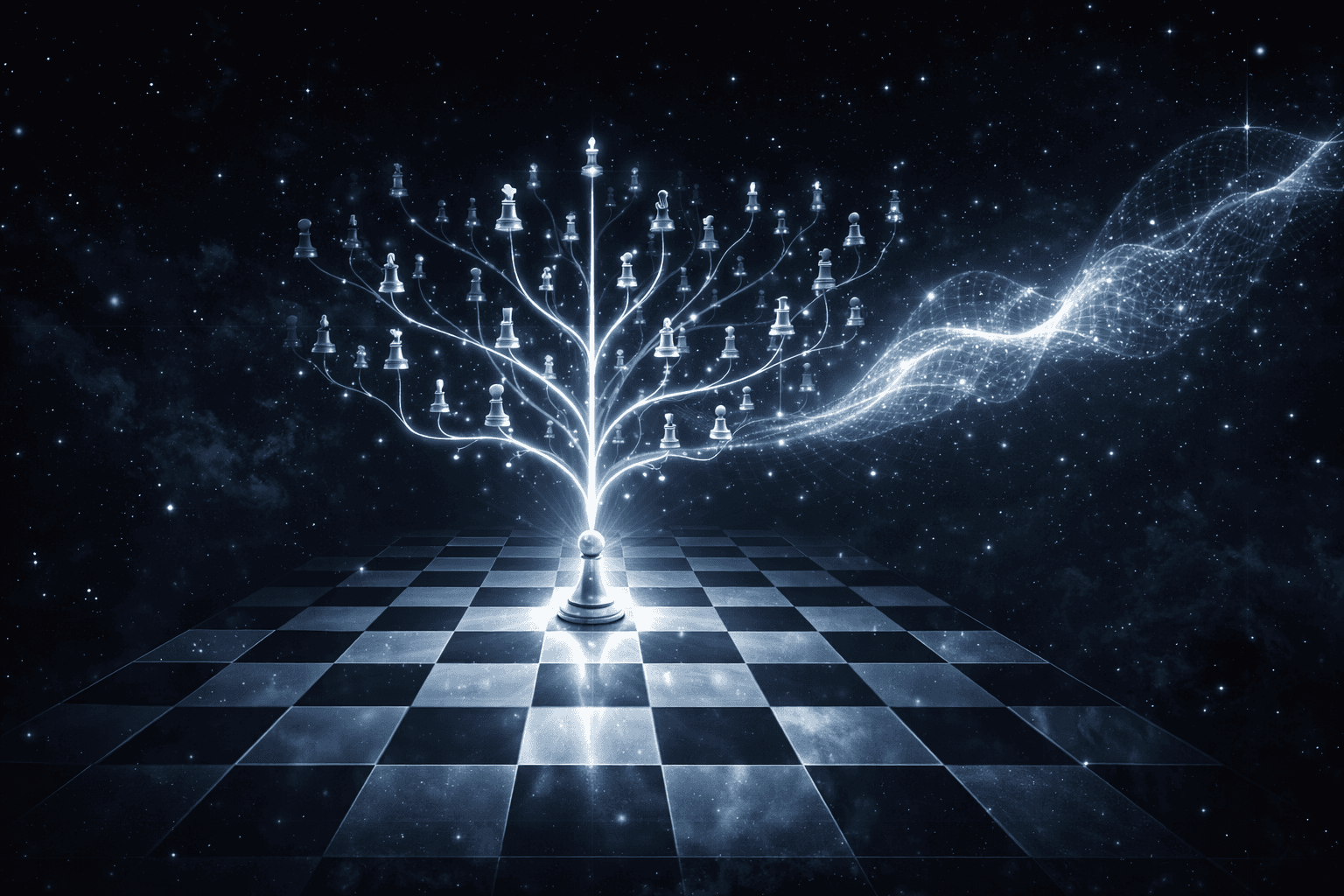
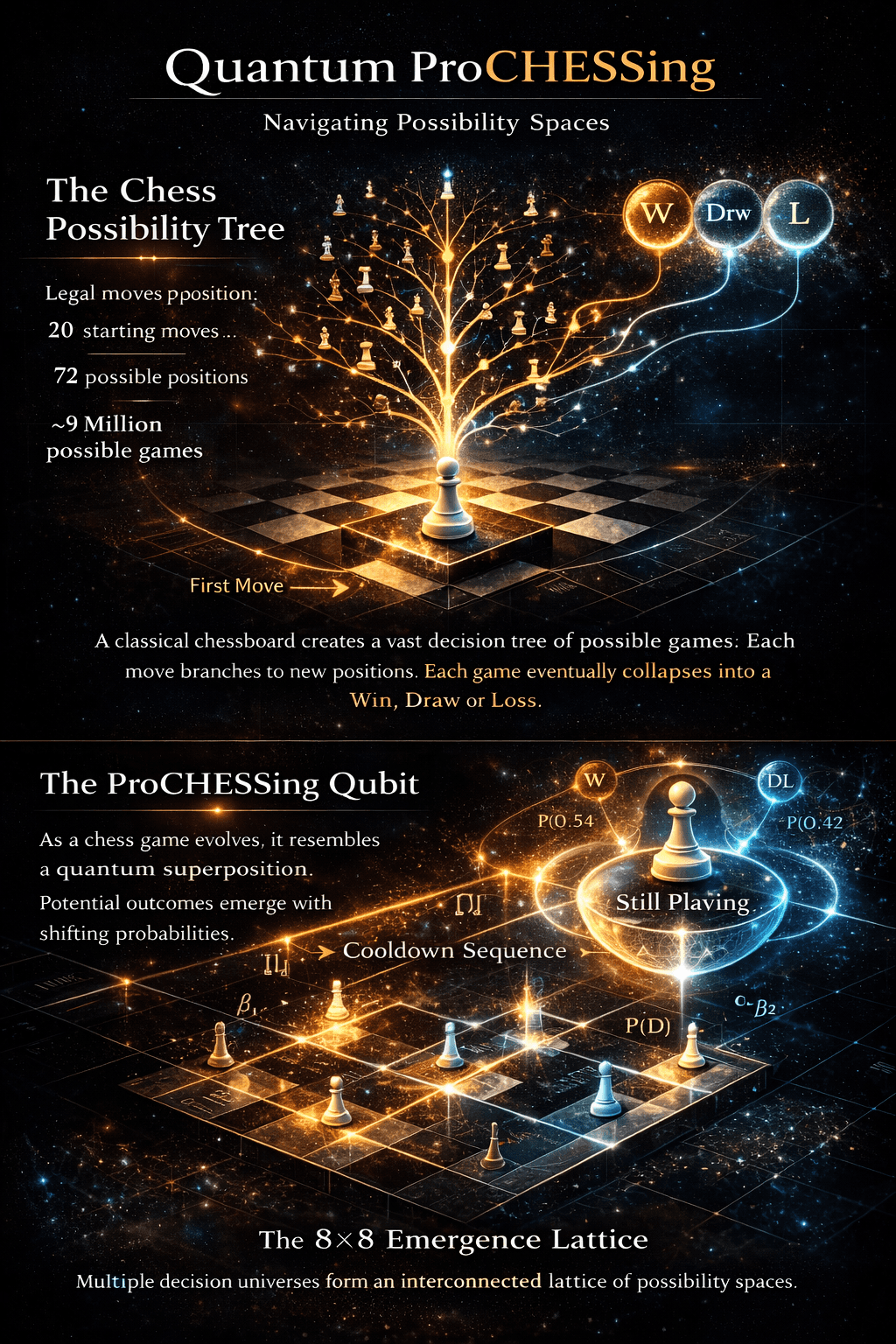
Quantum ProCHESSing begins with a simple observation: a chess position is more than a board arrangement. It is a structured field of possible futures. Some futures favor White. Some favor Black. Some drift toward draw. Until the game ends, these futures remain active in weighted suspension.
This project uses chess as a bridge language for understanding how classical systems might reason in a more quantum-shaped way: through branching state spaces, deferred collapse, structural bias, and emergent higher-order patterns.
Still Playing
A position may lean strongly toward one outcome without yet collapsing into it.
Deferred Collapse
Intelligence often improves when it delays commitment until the structure is clearer.
From qubits to lattices
Core Architecture
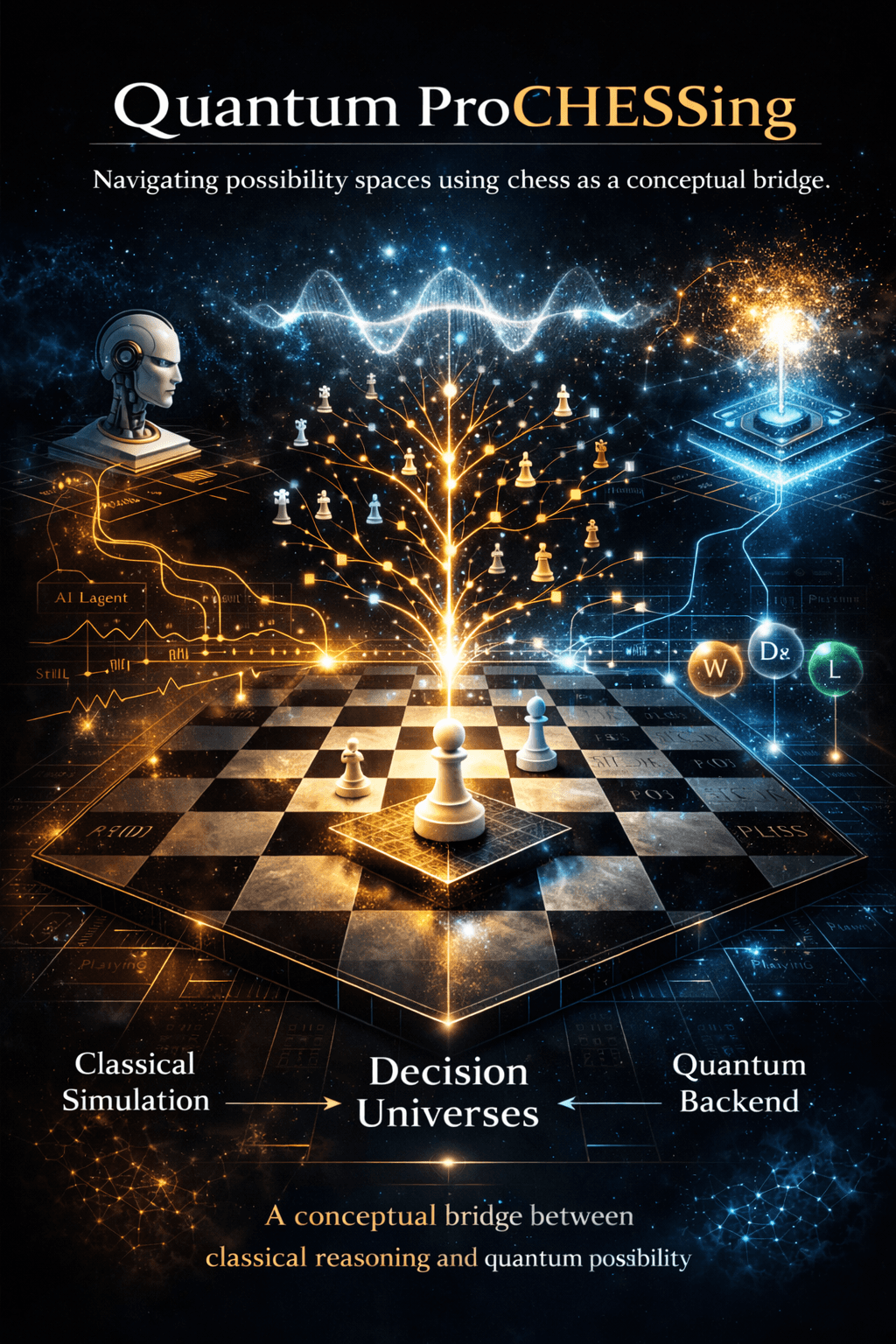
Quantum ProCHESSing is built in layers. A single game becomes a qubit-like decision universe. Many such universes form chains, registers, and lattices. The result is an architecture in which intelligence is not just computation over fixed states, but navigation through weighted possibility fields.
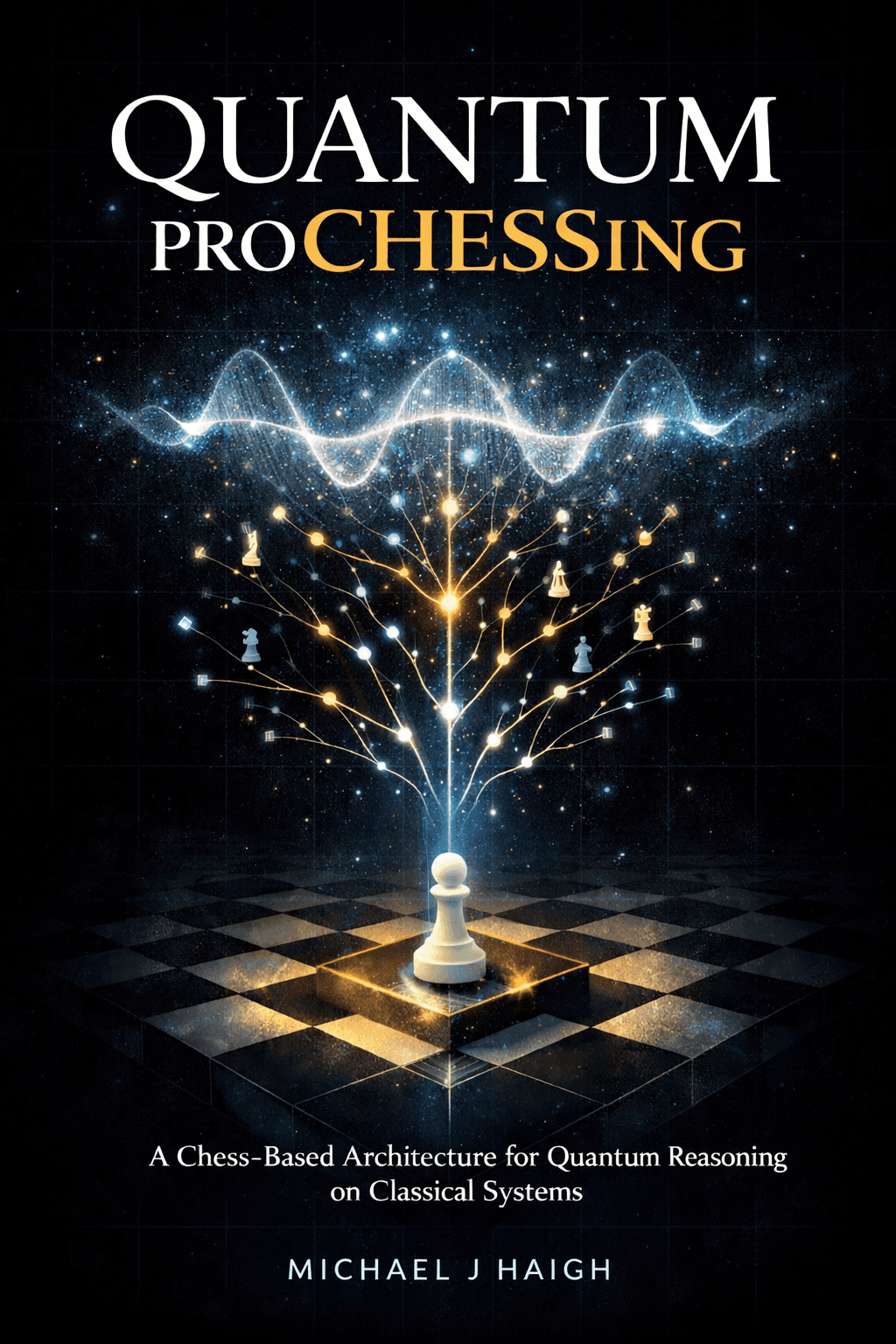
A small board with enormous depth
From qubits to lattices
Quantum ProCHESSing is built in layers. A single game becomes a qubit-like decision universe. Many such universes form chains, registers, and lattices. The result is an architecture in which intelligence is not just computation over fixed states, but navigation through weighted possibility fields.